
The Constellation
How to Think Like a Threshold Guide, Framework 7

Why this essay? The previous Framework (6) laid out six structural opposites of extractive money. We discussed Wörgl, the small Tirolean town whose bridge and ski jump are still standing, built in 1932 with currency that lost value every month it sat in an account. Wörgl proved that even a small slice of those six inversions, run by townsfolk with no economic training, can produce real prosperity.
The Miracle of Wörgl came to an end with a single letter from the Austrian National Bank.
This week’s essay addresses how to avoid a single institution being captured or shut down. The answer is a constellation, and we have an example constellation that has been ticking away below the radar in Egypt since 1977.
The story so far
Framework 1 placed the S-curve at the center of everything: living systems never stop growing, and all living systems follow the same trajectory of slow, then fast, then slow growth. Civilization, at least as we know it, has been riding the fast, steep part of the curve for twelve thousand years, and that steep part is now tapering off.
Framework 2 identified the engine that drove us up the steep part: an extractive, debt-based monetary system with a single instruction encoded into its architecture: grow or die.
Framework 3 traced that grow-or-die instruction through time. Chattel slavery became debt bondage. Debt bondage became wage compulsion once the commons were enclosed. And now, the most recent phase is enslaving even those who thought they were free.
Framework 4 asked why an alternative had never been tried at scale, and answered that the consciousness and the infrastructure required to run cooperative monetary systems at scale had never co-existed before. They do now.
Framework 5 showed how the template for cooperative exchange has been running under our feet in the forest the whole time. Mature mycorrhizal networks are the working example.
Framework 6 specified what an alternative monetary system would have to do, and showed that Wörgl had already tested an early prototype in 1932.
That brings us to Framework 7.
The SEKEM Story
Setting the scene: a desert sixty kilometers northeast of Cairo
In 2000, soon after the world learned that the Y2K bug was a nothing-burger, I travelled from London to Cairo for my first taste of Egypt.1
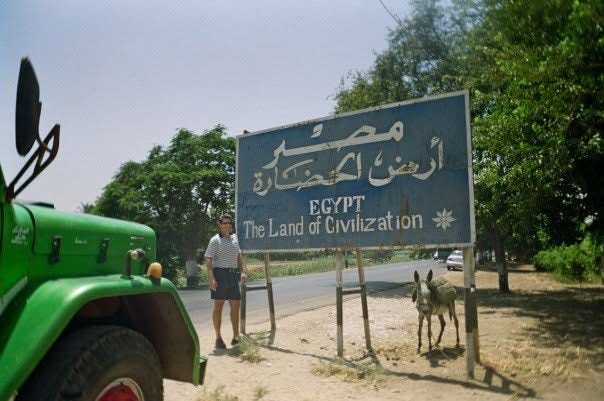
The occasion was a friend’s 40th birthday party. We’d worked together in Australia and the US, and he wanted to celebrate the milestone in his penthouse on the banks of the River Nile. And what a celebration it was!
A handful of us survived the party and made our way across town at 2am to El Gato Negro, a watering hole frequented by locals, in Mohandiseen, Cairo. It was my friend’s favorite local to escape the heat of Cairo.
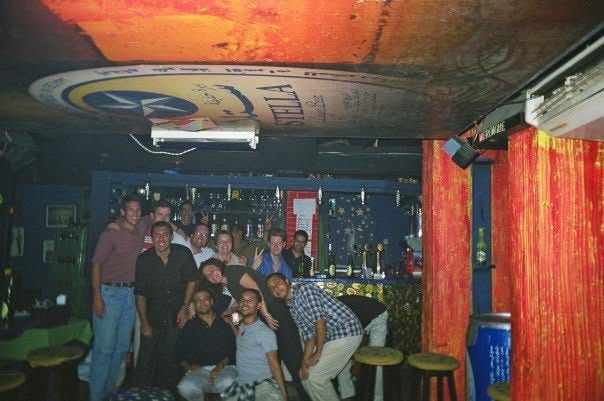
It was in that bar that I first heard the fascinating story of Ibrahim Abouleish.2
In 1956, Ibrahim Abouleish moved to Graz, Austria, 400km from Wörgl, the town we discussed in Framework 6. He spent twenty-one years there, accumulating a doctorate in pharmacology, an Austrian wife, a family, a comfortable career, and a sense that his country needed him at home. He returned to Egypt in 1977, saw a vision of seventy hectares of forest in an untouched desert sixty kilometers northeast of Cairo, and bought the land.
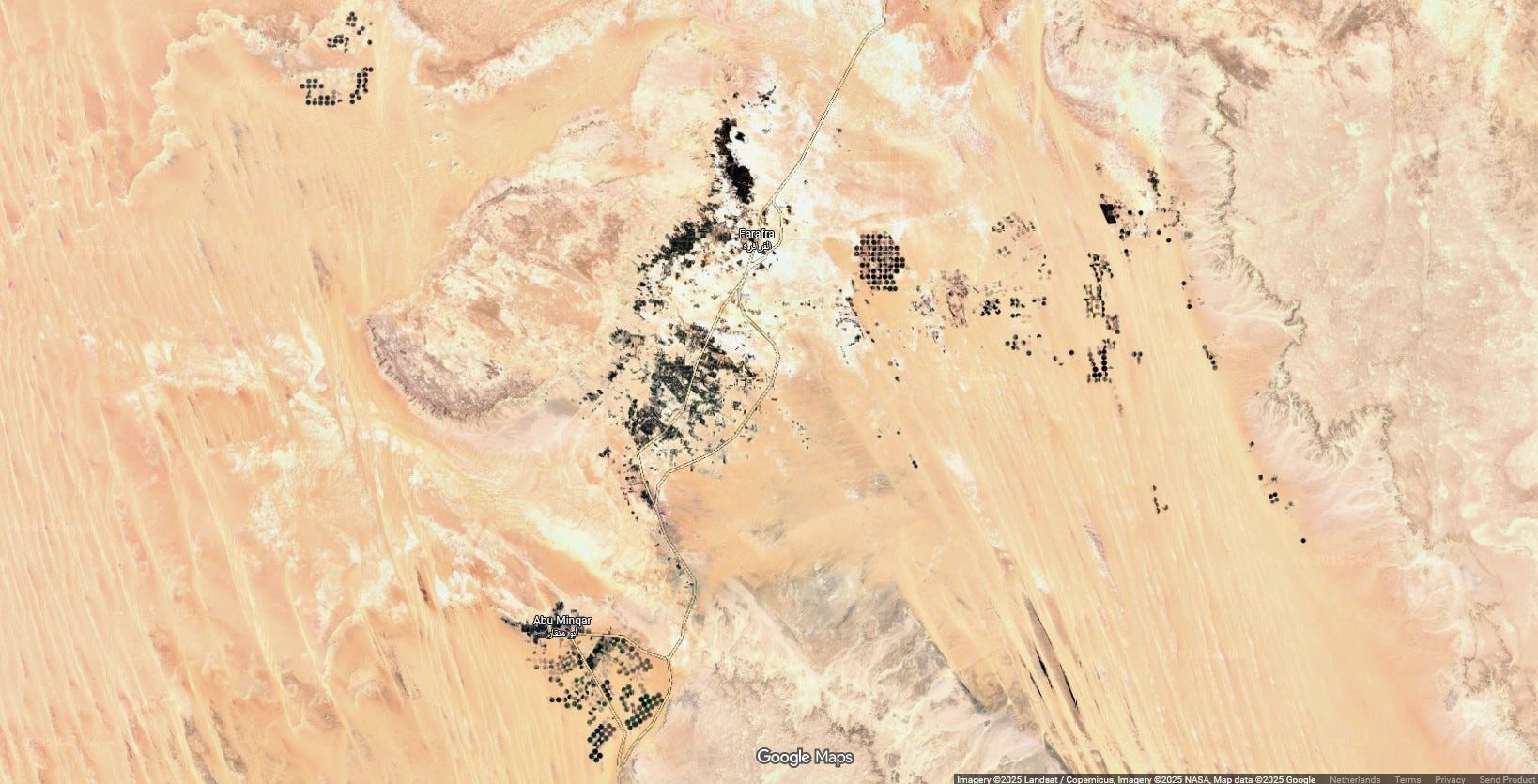
He had no farm experience and the land had no water. Egypt was sliding into the conditions many of us are familiar with in 2026: state corruption, broken schools, broken clinics, torn social fabric, and an economy that served only a handful at the top of society.3
The history of what became the highly profitable and successful SEKEM cooperative has been well documented.4 What’s less commonly spoken about is how Abouleish built a constellation.5
The first piece of the constellation was the biodynamic agriculture itself: regenerated desert soil, trees strategically planted as windbreaks, and irrigation channels fed by a single well. That part took years and it’s what most people know SEKEM for.
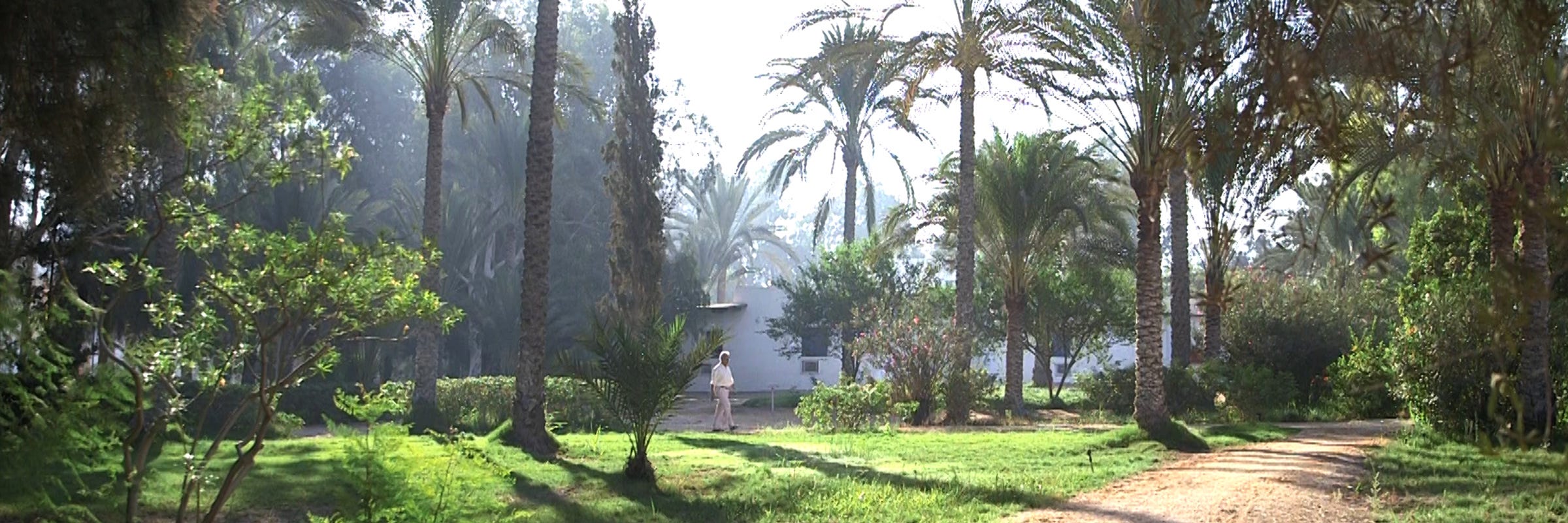
While the farm was still finding its feet, Abouleish was already building the other pieces of the constellation. A Waldorf school opened on the site for the children of the workers and grew into a full primary and secondary school system. He opened a medical center for the families. By 1984 he had founded the SEKEM Development Foundation, a non-profit body separate from the farm and the companies, holding the cultural and educational work.6 The Foundation is funded by a fixed share of the companies’ profits and answers to its own board.
The companies continued multiplying. There are eight of them now, each a separate operating entity under the SEKEM Holding. Libra farms the original land and partners with around two thousand other farmers across Egypt. Mizan grows organic seedlings. Hator handles fresh fruits and vegetables. Lotus does herbs and spices, ISIS produces organic foods and beverages, NatureTex makes organic cotton textiles, and ATOS Pharma produces medicinal herbs and natural medicines. Ecoprofit provides sustainable management consulting services.
In 2009 a presidential decree authorized Heliopolis University for Sustainable Development.7 It opened to students in 2012, with the first Faculty of Organic Agriculture in Egypt, alongside Faculties of Pharmacy, Business, Engineering, and Arts. The University is a separate legal entity, with its own funding sources, its own faculty, and its own research programs.
When I lay all of this out, it sounds like a single family-run empire, but it isn’t. The companies trade with each other and each one runs its own books. The Foundation is independent, the University is independent, and the school sits inside the Foundation. The medical center is also held by the Foundation. The cooperative of SEKEM employees holds a third position alongside the Holding and the Foundation, and answers to neither.
SEKEM consists of three interrelated bodies at the core:
Eight companies under the Holding company.
A university, foundation, school, medical center, and a cooperative.
Around two thousand farmers in the supply network and about fifteen hundred people in the living community on the original land.
If you wanted to take SEKEM apart, you’d have to figure out where to start.
And then the state came
In 1984, Helmy Abouleish, Ibrahim’s son, became the CEO of SEKEM. He took over the executive leadership of the entire social enterprise after his father suffered a period of ill-health
In April 2011, a few months into the Egyptian revolution that ended Hosni Mubarak’s thirty-year rule, the outgoing regime arrested Helmy.8 The charge was corruption, an absurd claim for anyone who knew what SEKEM stood for. In hindsight, the intent of the arrest was clear. It wasn’t just a farm and a school and a clinic that drew their attention.
The perceived threat was something larger: a working demonstration that a community in Egypt could feed itself, school its children, heal its sick, and trade its goods internationally without depending on the institutions a Mubarak government had spent thirty years controlling. Mubarak’s regime had survived by controlling the conditions of its citizens’ dependence, and so it had good reason to notice when a community quietly stepped outside those conditions and kept going.
The prosecution eventually dropped all charges after a hundred days in jail. Helmy spent those hundred days without a phone, without a computer, and without contact with the operation he ran. He used the time, he later said, to think.
While he was doing that, SEKEM kept operating.
The farms kept producing, the companies kept shipping, and the school kept teaching. The medical center kept treating, the Foundation kept running its programs, and the university kept preparing for its opening the following year. The cooperative kept meeting, and two thousand partner farmers across Egypt kept harvesting and kept getting paid.
When Helmy was finally released, Egypt had a different government and SEKEM still remained SEKEM.
That’s what the Wörgl experiment never had the chance to demonstrate. Wörgl had one institution, one town council, one currency, and one slate of officials. The state wrote one letter and the institution came to a grinding halt. SEKEM was built on a different premise. The state went for the apex, but the constellation held its shape and continued thriving.
So the question that fascinates me is, How do you build coordination at the scale SEKEM accomplished that can’t be shut down overnight?
Why Wörgl could be shut down
The Miracle of Wörgl ended because the architecture was fragile. There was one issuing body, one council that could be sued, and one mayor who could be ordered to comply. There was just a single bank account that the central bank could refuse to clear, and one town hall that the police could surround. The structure was elegant, but the structure was also singular, and singular structures can be ended by singular acts.
There are a few historical examples that avoided this same demise. Robert Owen’s New Lanark.9 Fourier’s phalanxes.10 Mondragón cooperatives ran into a similar limit when their flagship, Fagor Electrodomésticos, went bankrupt in 2013, but the resilience of the entire cooperative kept them going.11 Most cooperatives, intentional communities, and currency experiments have less depth and therefore end quicker.12
The six patterns I introduced in Framework 6 are the minimum requirements for a regenerative economy. The current monetary system is designed for capture and rewards anyone willing to compromise and meet the requirements of continued capture (including philanthropic and charitable efforts). An experiment that refuses to compromise to capture attracts the attention of the system and attempts will invariably be made to shut it down. But that doesn’t mean there’s no hope.
How to build resilience against institutions
I’ve spent more than two decades working on and with various aspects of cooperatives, intentional communities, and currency experiments. I’ve seen the passion of those who are bitten by the bug of an alternative way of coordinating human activities, especially in the light of so many injustices in the existing system.
I’ve also seen most of them fail outright or lose momentum. It’s sad when it happens, but each failure brings numerous lessons.
It’s the lessons from those failures that led to the drafting of The Emancipation Architecture. It’s a huge document, which, taken as a whole, is organized across three nested scales.13 SEKEM provides a prototype of what a functioning model looks like in practice. These, I believe, are the minimum scales that should be addressed if something like SEKEM emerges elsewhere.
Scale 1: The Bioregion
The first scale is the bioregional one.14 This is the scale of one place, one community, one piece of land, and all the people who depend on it. At this scale, three functions have to be held by three separate bodies that cannot capture each other.
The Commons. The land itself, the productive facilities, the watershed, and the ecological infrastructure. Held in trust, outside the market, permanently. SEKEM’s land isn’t formally held in inalienable trust under Egyptian law, although it functions as a commons in practice. (It also helps being in the middle of an inhospitable desert, where land is less in demand.) For now, it’s the principle that matters: the land and the productive infrastructure sit in a body that cannot (easily) be sold, mortgaged, or seized.
A local medium of exchange. This is the bioregional issuance and demurrage function from Framework 6. SEKEM still uses the state-issued Egyptian pound today, although numerous discussions and thought experiments have been held. The principle is that the function of issuing the local medium of exchange needs its own body, answerable to the community.
Productive enterprises. The farms, the workshops, and the businesses that turn the work of the bioregion into goods and services. These operate on commons-held land under regenerative mandates, paying ground rent to the commons body and paying their workers in the bioregional currency. SEKEM’s eight companies are the living prototype and have been operating as such for forty-eight years.
So the first scale of a workable constellation consists of three functions and three separate bodies, none of which are able to act unilaterally over the others.
Scale 2: Bioregional Exchange
The second scale is the inter-bioregional one. This is the scale at which individual bioregions connect to each other. SEKEM gives us a partial picture of this scale through its export trade across Europe and North America, although the full architecture demands two more functions.
A clearing mechanism must exist, so that bioregional currencies can trade with each other. If your bioregion uses one currency and mine uses another, we need a protocol for converting between them in ways that don’t let either currency capture the other. The Inter-Bioregional Clearing Protocol, drawing on Will Ruddick’s work in Kenya, specifies this function.15
A learning network must exist, so that what one bioregion discovers travels to the others, including the failures. The pattern here is mycelial: information flowing across the network, with no central editorial control. SEKEM’s research, published through Heliopolis University and the international Demeter biodynamic network, plays a version of this role.
Scale 3: Human Production
The third scale is the enterprise scale that coordinates the needs versus the productive capacities of the land, individuals, and families living in the bioregion. The enterprise is community-owned and serves the households that keep the cooperative enterprise functioning. Service cooperatives at this scale progressively replace the household’s fiat-denominated obligations with bioregional alternatives. The easiest to start with is food from local regenerative production. Then, housing built by the community on commons-held land. Energy could be produced based on bioregional resources (electricity generated from flowing rivers instead of solar that requires external resources, for example). Education through a locally-managed school. Healthcare through a medical center that prioritizes locally developed healing modalities. Care for elders, provided by the community itself rather than the individual family.
For over forty-eight years, SEKEM has built almost every item on this list for the people who live on the land. They provide housing on the site, food from the farms, schooling for the children, and medical care for the families. Dependence on external systems has been reduced, line item by line item, as each function moved inside the constellation, building their resilience as the constellation grew.
Why a constellation is resilient
Any single node within a constellation can be removed and the rest of the constellation can adapt and remain operating.
This is the structural property Elinor Ostrom won her Nobel Prize for documenting, across hundreds of real cases of commons governance over centuries.16 The principle she identified is called polycentricity.17 This is a system whereby decision-making is distributed across multiple overlapping bodies, with no single actor able to act unilaterally. The governing systems include tripartite boards, community assemblies, councils of people chosen for competence, and associations linking one bioregion to the next. Importantly, each of these bodies conform to all legislation that applies to them.
Polycentricity isn’t as complicated as it may sound. You already live inside polycentric systems. A high-functioning family has overlapping authority (mother and father make decisions in different domains based on their areas of expertise). A well-functioning classroom outside the traditional education system takes input from children, parents, and the wider community, rather than relying only on the teacher and principal. A functioning Community of Practice intentionally spreads its decisions across all of the voices represented. The authority in all of these examples is distributed, overlapping, and answerable to everyone who participates.
An intentional constellation design asks that the institutions a community depends on for its survival behave the way the best human systems you’ve ever been part of already behave. Most of the otherwise creative initiatives I’ve seen don’t take these core design principles into account and so invariably run out of momentum at some point.
A constellation is also resilient against the kind of attack twenty-first century institutions cannot resist. The state can write a letter to a town’s mayor demanding compliance. The state can revoke a charter, freeze an account, arrest a CEO, or file an injunction. But the state has trouble justifying sending the same notification to forty different bodies in three different legal forms operating under five different governance structures across two scales. The notification has to be crafted taking into account the legislation that each node operates within. Even then, removing one node leaves the others standing. This is how we use the law creatively against the state.
In SEKEM’s case, Helmy Abouleish’s prison term during the Arab Spring didn’t stop the farms. When Mubarak fell, all of the operations kept going. When el-Sisi took power in Egypt in July 2013 following a military coup, the medical center kept providing services. Two presidents have come and gone since the revolution. SEKEM has outlasted both of them and is now preparing the next generation in a university that didn’t exist when Helmy was arrested.
What you can do
OK, so how does this affect you as a Threshold Guide? I know it can all sound theoretical and unrelated to your day-to-day concerns.
Take the work that’s most meaningful to you, and ask a simple question.
Where in this work is there a single point of failure?
It could be a single platform you publish on, or a single institution that accredits the work you do. It could be a single funder, or a single piece of software. Maybe it’s a single relationship that, if it ended, would end the work. Perhaps it’s a single building, or a single license, or a single person who holds knowledge that no one else has.
Find just one. One is enough.
Now ask the second question.
If this single point were removed tomorrow, what would survive and what would have to be rebuilt from scratch?
The honest answer for most of us is that more of our work hangs by a single thread than what’s comfortable. In our valley, we are far too reliant on an increasingly failing municipality to offer basic services like water and sewerage.
The good news is that you don’t have to immediately fix anything. What you’re doing is building a polycentric awareness. In time, you’ll be compelled to build a second entity that can function as an equal node in your constellation. And then a third.
Turn your work into a constellation small enough that you can hold it, and resilient enough that it can hold itself.
The first step is simply polycentric awareness. Most are entirely unaware of how reliant we are on single points of failure.
What remains unknown
The full three-scale constellation I’ve proposed (including a bioregional currency and exchange) doesn’t exist yet.
SEKEM demonstrates the bioregional scale (Scale 1) and the principle at the human production scale (Scale 3), and it participates in international networks that gesture towards the inter-bioregional scale (not quite Scale 2).
Mondragón demonstrates resilience at the level of human production (Scale 3).
The Catalan Integral Cooperative demonstrated the bioregional issuance property (Scale 2) until pressure from the Spanish state ended its currency.18
Various community currencies in Kenya, Brazil, and Germany have run pieces of the Scale 2 design for years.
None of them have run all of the three scales together. The architecture as a whole is composed of working parts, each of which has been demonstrated somewhere. The integration is the part we’ve not yet seen.
This is a different kind of uncertainty from what surrounds most utopian proposals. I’m not asking whether the design could work. Each piece of it already works. I’m asking whether someone, somewhere, will take the trouble to assemble all three.
A few candidates are already building momentum. There are bioregional initiatives in British Columbia, in the Cascadia bioregion, in parts of Italy, in southern Africa, in the American southwest, and in central Europe. Each of them are running some subset of the design, and each of them is learning important lessons. The learning network exists in early form, and some are working on formalizing the learning.19
I honestly don’t know whether any of these candidates (including where I’m involved, the Valley of Grace in South Africa) will create sufficient coherence to demonstrate the full constellation… before significant food shortages start showing up as a result of the closure of Hormuz. The coherence cannot be magically conceived by the visionaries and Threshold Guides alone. Coherence will be conceived by the people in these bioregions who can see what’s coming and what’s emerging… and can tell compelling stories about the constellation.
A constellation of wells
When Ibrahim Abouleish stood in the Egyptian desert in 1977 and saw something most others couldn’t, his vision was of a single well drawing water from the aquifers below the sand. He could see trees and forests thriving. Despite all the evidence, he knew the barren land would turn lush when humans work with nature. Nature couldn’t do it on her own. He knew that animals and people would come for the water. Insects and birds and butterflies would settle in the shade. He could see it when others couldn’t.
He held a vision of a single well.
Forty-eight years later there are wells right across the Egyptian desert that draw on what the SEKEM constellation proved was possible: organic farms supplying processing facilities, biodynamic methods spreading through the partner network, schools using the curriculum Heliopolis developed, and hospitals using the natural medicines ATOS makes. The original seventy hectares are still there, still green, and still feeding fifteen hundred people. The constellation around them grew quietly while no one paid attention to what was emerging. The constellation has survived and thrived.
What the Decade of Dramatic Disruption asks of us is one more constellation, and then another, and then another, until there are too many to count; until there are too many to be resisted by the state. Each one forms the centre of coherence, conceived in its own bioregion, and supporting its own community. None of them will be stopped by a single injunction, because there is no central authority to oppose.
The Wörgl bridge built in 1932 still stands today, even though the Wörgl scrip is gone. The bridge survived because the structure outlived the institution that built it. The constellation asks something larger of us. The pattern of building has to itself become uncapturable, because there is no single experiment that can be captured.
A thousand Wörgls; a thousand SEKEMs. Each one holding its own piece of custodial land, its own currency, and its own people. None of them can be ended by a single injunction from a central authority, because there is no longer any single authority that can stop constellations that want to be born.
A constellation has no CEO and no point of failure. That is the point.
That’s all for this week.
Next week, we’ll cover Framework 8, which I’m calling The Crossing. Each constellation has to be funded somehow, and the capital that has been accumulating in the old system has to find a way across. Divestment sells to another buyer inside the same old system. But transvestment moves wealth out of the system entirely, from assets that can be seized into commons that cannot. I’ll walk through what that crossing looks like, why it asks something different of the wealth holder than divestment does, and what happens to the person who commits to this process.
Remember to love the ones you’re with, and frame on!
Michael 💚
If you’re too young to know what the Y2K bug was, it was simply an apparent computer flaw that caused global panic heading into the millennium. Because early computer memory was expensive, programmers abbreviated four-digit years to just two digits (e.g., “99” for “1999”). This created fears that computers would read “00” as 1900, crashing infrastructure and financial systems worldwide. Apart from a few tiny glitches, nothing happened.
Ibrahim Abouleish (1937–2017) was a visionary Egyptian pharmacologist, chemist, and social entrepreneur. He is best known as the founder of SEKEM, a comprehensive development initiative launched in 1977 that transformed arid Egyptian desert into a thriving, biodynamic agricultural and economic community. https://rightlivelihood.org/the-change-makers/find-a-laureate/ibrahim-abouleish-sekem/
President Anwar Sadat abandoned Gamal Abdel Nasser's state-socialist model in 1974, opening the door to foreign investment and private enterprise. While this ushered in an era of wealth for a new class of entrepreneurs, it also caused severe inflation, speculation, and a widening wealth gap. For a detailed account of Sadat’s history, see https://www.merip.org/1982/07/sadats-egypt-a-balance-sheet/
Many organizations have studied the SEKEM model. Abouleish published his version of the accomplishment in a 2005 book, Sekem: A Sustainable Community in the Egyptian Desert. See more at https://bit.ly/S3K3M
I use the word constellation in a specific way throughout this essay. A constellation is a set of bodies that hold a recognizable shape together without any one of them being the center. As an analogy, no single star in the Orion constellation has any more importance than the others, and no single star, if removed, destroys the shape of the constellation. The shape of a constellation is held by the relationships between the bodies. That’s the property I am suggesting when I use the word for an institutional design: a configuration whose pattern survives the loss of any single member, because the pattern was never located in one member to begin with.
SDF’s vision combines teaching, research and practice with a unique humanistic core programme that aims to develop curious and creative minds. https://www.nextfood-project.eu/sekem-development-foundation/
Heliopolis is the first university in the Middle East to place sustainable development at the core of its mission. Backed by the SEKEM Initiative, the campus functions as a “living lab” with solar installations, biodynamic agriculture, and sustainable water management. https://sekem.com/en/cultural-life/heliopolis-university/
The 2011 Egyptian revolution was sparked by Tunisia’s uprising. Millions of Egyptians protested police brutality, government corruption, poverty, and President Hosni Mubarak’s 30-year authoritarian rule. The core demands were captured in the slogan: “Bread, freedom, and social justice.” https://pomeps.org/arab-uprisings-the-state-of-the-egyptian-revolution
New Lanark is an 18th-century mill village in Scotland that served as a massive social and economic experiment by Welsh industrialist Robert Owen. Beginning in 1800, Owen transformed the community into a utopian model of industrial efficiency and worker welfare, proving that treating employees well could still be highly profitable. A huge restoration project commenced in 1968. Today, the village operates as a preserved historical site and a UNESCO World Heritage Centre, allowing visitors to explore the restored schoolhouses, mill buildings, and workers’ quarters. https://whc.unesco.org/en/list/429/
Fourier’s phalanxes (or phalansteries, from phalanx, an emblematic military unit in ancient Greece and monastère or monastery) were self-contained, utopian communities designed in the early 19th century by French utopian socialist Charles Fourier. They were structured as cooperative agricultural and industrial networks where individuals engaged in “attractive labor” by rotating tasks, living together to maximize social harmony and productivity. https://freethought-trail.org/causes/cause:fourierist-utopianism/
The 2013 bankruptcy of Fagor Electrodomésticos was a seismic event, as it was the flagship cooperative and birthplace of the renowned Mondragon Corporation, the world’s largest worker-owned cooperative. Its collapse sent shockwaves through the cooperative movement globally, but the cooperative survived. https://iuscooperativum.org/article/a-brief-chronicle-of-and-some-notes-on-the-bankruptcy-proceeding-of-fagor-electrodomesticos-s-coop/
Cooperatives face pressure to balance member welfare with competitive market forces. A case study on Western European and Japanese consumer cooperatives, published by Cambridge Core, found that they eventually failed when their specific cultural and social support bases eroded. https://link.springer.com/article/10.1007/s11301-024-00421-4
The complete entity register, with twenty-three entity types across three nested scales and their legal forms, governance structures, funding sources, and key relationships, is specified in Movement III, Appendix C of the Emancipation Architecture documentation (Google doc). SEKEM is referenced here as a living approximation, although it operates in Egyptian law inside the Egyptian pound and does not implement all of the formal specifications. The principle holds even where the specifications differ.
A bioregion is a shorthand designation for a ‘bio-cultural region.’ It is rooted in the idea that culture stems from place and that human cultures develop in relation to the natural ecosystems they inhabit. Bioregions are defined by characteristics of the natural environment rather than by man-made divisions (countries) and are the sum of the cultures, ecoregions & ecosystems, and watersheds that arise from a particular place. These spaces are the largest areas where a person can walk and still find connections to other people based on shared place. These physical boundaries, and the geographic, topographic and living flora and fauna all work together to create an ecoregion.
There is some flexibility in how a bioregion is defined. In contrast, 846 distinct ecoregions have been categorized, compared to 195 countries. You can find your ecoregion on this Google map: https://ecoregions.appspot.com. For more on bioregions, see https://bit.ly/Bio-reg.
Will Ruddick (follow him!) has proposed a Cosmo-Local Credit protocol, developed through Grassroots Economics in Kenya. It specifies a clearing mechanism that allows community currencies to trade with each other without converting through a national currency. Working implementations have been running in Kenyan community inclusion currencies since 2010. https://cosmolocal.credit/introduction/history/
Elinor Ostrom received the 2009 Nobel Memorial Prize in Economic Sciences for her work on commons governance, summarized in Governing the Commons: The Evolution of Institutions for Collective Action (Cambridge University Press, 1990). The eight design principles she identified across hundreds of cases form the empirical basis for polycentric governance design. See https://bit.ly/3OWhCPi for a PDF copy of her book.
Polycentricity describes a system with multiple independent centers of decision-making or power that interact under an overarching set of rules. Rather than a strict top-down hierarchy, it empowers different authorities to collaborate and self-organize, making it highly relevant in governance, urban planning, and economics. It is supported by an open-source legal system called ULEX. See https://bit.ly/43zFIDS
Catalan Integral Cooperative (CIC) is a network of consumer and service cooperatives based in Catalonia, Spain as well as an activist project. Its aim is to build an alternative economic model. https://participedia.net/organization/catalan-integral-cooperative
See, for example, R3.0’s Bioregional Knowledge Commons (BKC) Community of Inquiry & Practice (CoIP) Project on Practices & Patterns, announced in this LinkedIn post: https://www.linkedin.com/posts/billbaue_i-spent-much-of-yesterday-in-local-cafes-activity-7440043602329825280-dJPB
Thanks Michael, I really enjoyed this post and downloaded your Emancipation Architecture and am looking forward to digesting it. Keep up the amazing work! God bless.