

Why this essay? There’s a lot going on right now, and one could easily make the case that everything is hopeless. But the worse things get, the more optimistic I become. A breakdown makes space for genuinely new ways of thinking about challenges to emerge. That’s what happened this week. A meeting between two initiatives in The Valley of Grace that have been at loggerheads for decades unblocked a blockage about land tenure that affects any regenerative initiative that involves land. In other words, every. single. one. The concept is called Protective Illiquidity (PI), and I hope it will be picked up by academics who are better suited than me to introduce the notion into general discourse. In short, PI preserves the coordination system that gives any parcel of land value. If you’re working with or on land that you want to protect from market forces and unlock funding, you’ll know how challenging it can be. The meeting was about this conundrum, and this essay explains what happened and why I think the unblock is significant.


Setting the Scene
As usual, a few context-setting snippets so that the remainder of the essay makes more sense.
The global land challenge. Across the world, land held in customary, communal, or otherwise in-between forms like land trusts sits in an uneasy relationship with legal systems built to recognize individual, saleable title. Billions of people hold land this way, through ancestry, residence, or long use, with no title deed to show for it.1 When such land is formally resolved, the resolution most often converts it into freely alienable property, and the historical record shows what tends to follow: ownership concentrates, and the holders with the weakest documentation lose their footing first. This is one of the quiet, recurring tragedies of regenerative and community-based land work everywhere.
TRANCRAA. In South Africa, the Transformation of Certain Rural Areas Act of 1998 governs twenty-three former ‘coloured’ rural areas, many of them old mission stations, whose land has long been held in trust by the state on the community’s behalf. The Act was meant to transfer that land to the residents or to entities they choose.2 More than two decades on, almost none of these transfers have been successful. The Valley of Grace is one of the places where the process has stalled, and that stall is where this essay begins.
Coordination itself as an asset. We tend to think of value in terms of things: the land, the buildings, the factory, the orchard, or the bank balance. But a good deal of what a community is ‘worth’ can be found in how its people coordinate: the trust, the shared rules, the ways of deciding together and resolving disputes without a court. David Ronfeldt’s TIMN framework names the four forms this coordination can take: Tribes, Institutions, Markets, and Networks, each with its own logic and its own way of holding a community together.3 When land gets converted into a purely Market asset, it is often this coordination that quietly dissolves, because the Market form runs on different rules than the Tribal or Institutional forms that came before. The emerging Network form is the newest of the four, and it may be the one best suited to holding regenerative value without extracting it. That’s why the form in which a resolution is defined matters as much or more than the resolution itself. This was the penny-dropping moment for me in this week’s meeting.
Now let’s dive into what happened in the meeting and explain Protective Illiquidity, without getting into too many technical details (although these are available if you’d like them).4
The Blessing in the Blockage
It was a cold Overberg morning, with fog lying thick in the valley, when four men from very different backgrounds met at Rietdak in Genadendal (Valley of Grace in Afrikaans).5 The man sitting across from me was Treasurer of the Transformasie Komitee, though he wasn’t there in any formal capacity that morning.6 The meeting had been convened by the President of the local Rotary club, who wasn’t there in his formal capacity either. Also at the table was the Pedi (Northern Sotho) coordinator for the Robben Island Mayibuye Archives, one of the world’s leading liberation-struggle archives.7 I was there as a valley resident who thinks too much about coordination systems. Nobody was there to represent any body. That was the point. When people put aside their official roles, they can sometimes say things an official role would forbid. The meeting hadn’t been called or sanctioned by any organization.
We all wanted a common outcome: to unblock a legal process meant to transfer land to the community, but which has stalled after two decades of constant bickering.
I asked a question which has been bugging me for the past few weeks:
“What if failure of a land transfer process is a blessing in disguise?”
The fire behind us crackled in the silence. The Treasurer looked at me, unsure of whether I was being foolish or useful.
In the resulting conversation, I explained that a stalled resolution was perhaps the only thing currently protecting what the community actually values, which is their heritage and their connection to the land, the mountains, and the rivers. Had the land tenure issue been resolved, we’d likely be sitting with a commercial apple farm in our backyard, with regular spraying causing all forms of breathing difficulties for young and old; or a wind farm along the ridge of the mountains, completely changing the village setting, while destroying local families of Jackal Buzzards, Black-winged Kites, and Verreaux’ Eagles.
Let me be clear that I’m not defending institutional paralysis. Nobody around that plastic tablecloth wanted a stall in negotiations. The frustration among valley residents is real and won’t simply dissipate while the stall continues. But underneath the frustration I’d seen an emergent potential, and once you see it you can’t un-see it. And as it turns out, what we’re dealing with is one of the most common situations in all regenerative initiatives.8
Almost every regenerative project I know of eventually runs into some version of land held in some ambiguous, contested, or in-between status; a (lack of) title deed nobody can quite clear; a communal holding the law doesn’t know how to interpret; or a parcel where the ownership is genuinely unsettled and has been for a long time. The people doing the work experience this as an obstacle, a thing blocking the prosocial future they can picture. And the completely natural reflex is to want it resolved, cleared, and finalized as soon as possible.
My claim is that the reflex is where danger lies, especially in light of the ten frameworks we’ve previously explored:
How to Think like a Threshold Guide

Why this essay? The idea of a Threshold Guide, someone who helps others navigate crossing a threshold during a period known as an interregnum, or a time between worlds, has proved popular. Many have been asking what cognitive capacities are required to be a Threshold Guide. This …
Why illiquidity is worth protecting
Illiquidity means an asset (like land in The Valley of Grace) cannot be quickly sold or turned into cash without losing a lot of its value. Turning our valley into a commercial apple farm or wind farm would destroy its rural, natural setting. It would destroy the health of future generations, both human and more-than-human. The same goes for any parcel of land where tenure is unsettled.
My simple claim with Protective Illiquidity is that the inability to sell isn’t a weakness in the asset. Instead it’s a moat around protecting everything the asset represents that isn’t valued by the Market, but is valued by those who care for Earth. Land that cannot be alienated stays interwoven with the people who live on it, the food they grow, the heritage they carry, and the ways they have learned to decide and coordinate together. Protective Illiquidity keeps the value where the community can access it, instead of letting it flow to whoever arrives with the most capital. In short, Protective Illiquidity safeguards value within the community, whereas Liquidity extracts value from the community.
This is no fringe theory. It’s the story of the English enclosures,9 and the story of the allotment of Native American land under the Dawes Act, where communal holdings converted to individual title collapsed from 138 million acres to 48 million in under fifty years.10 The pattern repeats across three centuries and five continents, and the variable that predicts it is remarkably clean. The decisive question is whether the resolution makes the land freely alienable.11 Where it does, concentration of welaht follows.
My argument is that alienability is the mechanism that undermines the health and wealth of communities. The capacity to be sold is the specific property that allows the capture of an asset or even a community. Karl Polanyi saw this in 1944 when he called land a “fictitious commodity,” something treated as made-for-sale that was never made for sale at all, inextricably interwoven with the institutions and relationships that give it meaning.12 To form a market for it, he wrote, was one of the strangest undertakings of our ancestors. Selling it is what severs the interweaving.
That’s the point I was making in the meeting: The inability to sell is the blessing. The process failed to convert the land into something the Market could take and sell. Two decades of frustrating delay were also two decades of protection, achieved by no one on purpose and defended, in practice, by almost everyone with a stake.
The Bioregional Challenge
Now the hard part, because this is where a comforting story would end, but the more honest enquiry keeps pushing the boundaries.
Ambiguity around land tenure only protects the community under certain conditions. It protects while the community’s own governance is functioning, and while the community controls the ambiguity itself, with no external custodian controlling it on their behalf. The very same unresolved status that shelters one community can subordinate another. Where the people who hold the land in trust are trusted, and actually provide the roads and the water and the arbitration, the unresolved tenure underwrites a working local order. Where they aren’t trusted, the identical legal ambiguity underwrites quiet dispossession and residents paying levies for services they never see. The stall in negotiations we’re navigating is no more than a temporary shelter. A shelter buys time, but it doesn’t build the permanent solution.
Which brings us to where I think the bioregional movement needs to make inroads, in ways that matter for issues around land tenure.
When people say “resolve the land question,” they almost always hear “sell it, title it, and make it market-legible,” because in the paradigm most of us were raised within, resolution and saleability are the same thing. My claim is that they are two very different things. An unsettled asset can be housed in more than one coordination form (referring to the TIMN model):
It can be housed in a Market form, where it becomes alienable and the pattern above takes over.
It can be housed in an Institutional form, where a bureaucracy holds it and the failure mode is capture and paralysis (what we’re witnessing in The Valley of Grace).
Or it can be landed in a Network form, a commons the community actually governs, where inalienability is written in on purpose and the land stays interwoven with the people whose life it holds.
David Ronfeldt’s framework of Tribes, Institutions, Markets, and Networks is the map that’s helped me navigate land tenure complexities in our valley, because it names the four forms and insists they have to be kept in balance, each with a bright side and a dark side. The error is treating the Market form as the only available resolution, when it most definitely is not. There is a way to resolve tenure that houses it in the Network form the community’s own governance already aspires to, and that resolution protects the value the way the accidental stall was protecting it, except on purpose, by design, and defensibly.
This is the door the Emancipation Architecture opens. We won’t step through that portal in this essay, because the design specifics are a working matter and this essay isn’t meant to be a how-to manual. What I want you to consider is simply this: The danger of resolving land tenure issues is in resolving into the wrong form, where the options are a Market form (Business-as-Usual) or a Network form (emergent). For the first time the distinction between the two are becoming clear, at least for me.
What This Means for You
If you’re involved in any kind of bioregional work, here is one thing you can take from this essay and test against whatever you’re building.
Before you try to resolve any contested or ambiguous land holding, stop and ask what coordination form the resolution will land it in, and whether that form is one the community can actually govern. The old question was “how do we clear this.” The better question is “what will this become once it’s cleared, and who will it belong to then.” That question, asked early, is the difference between an initiative that survives its own success and one that dissolves at the moment it appears to win.
If the question opens something for you, there are a handful of things worth getting to know, and I’ll name them as territory to explore, rather than steps to follow:
The idea of Protective Illiquidity itself, the notion that an asset’s resistance to being sold can be the thing that keeps it valuable.
Inalienability understood as a design property you build in on purpose, rather than a legal accident you stumble into.
Elinor Ostrom’s work on how communities govern shared resources without either privatizing them or handing them to the state, and in particular the delicate question of how much outside recognition a functioning commons can absorb before recognition becomes exposure.13
Ronfeldt’s TIMN, as the map of the forms an asset can land in.14
And Commitment Pooling, which is the same principle appearing on the money side, credits that hold value precisely because they cannot be frictionlessly cashed out of the network that gives them meaning.15
None of these bullet points are a recipe for success. Rather they’re a reading list for a set of questions most people never think to ask.
What Remains Uncertain
I should be honest about what I can’t claim with any form of certainty at all.
That ambiguity exists as far as land tenure is concerned is well documented (see footnote 8). The historical record is clear that removing the ambiguity, in the Market form, concentrates ownership and wealth. What isn’t proven, not at scale and not across generations, is that a community can take an accidental protection and convert it into a designed one, and then defend that design across the decades and the personnel changes and the moments of institutional weakness when the enclosure pressure comes back, because it always comes back. Non-alienability is a thing you defend continuously, never a thing you win once and keep. Whether a small community can sustain that defense long enough for it to matter is the open question, and nobody gets to answer it from a position of air-conditioned activism. It has to be run as a live experiment, in a real place, with real stakes. The Valley of Grace is one place where we’re going to test it, and I’ll report on the outcomes in future essays.
Returning to Rietdak
We didn’t resolve anything in the coffee shop that morning. That wasn’t our intention. But it was an emotional ending, nonetheless. We were all moved by the shift we experienced.
What shifted was smaller and more durable than any form of resolution. All of us came to the meeting seeing twenty years of failure, a process that seemed incapable of completing, and an enemy we called the stall. By the time the fire had burned down we were looking at the same twenty years and could see that the stall had bought us time. It had provided shelter from a storm that no one knew was brewing. The question we walked away with was no longer how to end the blockage as quickly as possible. Instead, it was whether the accidental protection could be turned into a chosen one, something built and governed and defended, before the window that has stayed open for two decades finally closes.
I think it can. More than that, I think the model for doing it is worth building carefully and sharing widely, because the situation in this valley is applicable to a far wider audience. The same situation exists in most regenerative projects the moment the question of land is raised.
So this essay is both a statement of intent and an invitation. We’re going to try to build a working model for exiting the Market form and landing in territory that the Emancipation Architecture describes. And if you’re in a bioregion somewhere, nursing your own version of this blockage, wondering whether your stall is a failure or a shelter, I’d like to build a model with you. Drop a comment, or a DM, or reach out on LinkedIn.
It was still bitterly cold when we left the coffee shop. The fire was still going, and nothing was settled, and for the first time in a long while, that felt like just the right place to be.
That’s all for this week.
Who knows what I’ll dive into next week, informed by what’s unfolding here in our valley.
Until then, remember to love the ones you’re with, and frame on!
Michael 💚
For the Food and Agriculture Organization’s definition of Land Tenure, see https://www.fao.org/4/y4307e/y4307e05.htm
For an overview of the Act, see https://bit.ly/TRANCRAA
I reference TIMN extensively. It’s a model of how human coordination forms have evolved through the ages. If you’re a new reader, you may want to first get a sense of the model: https://bit.ly/TIM-N
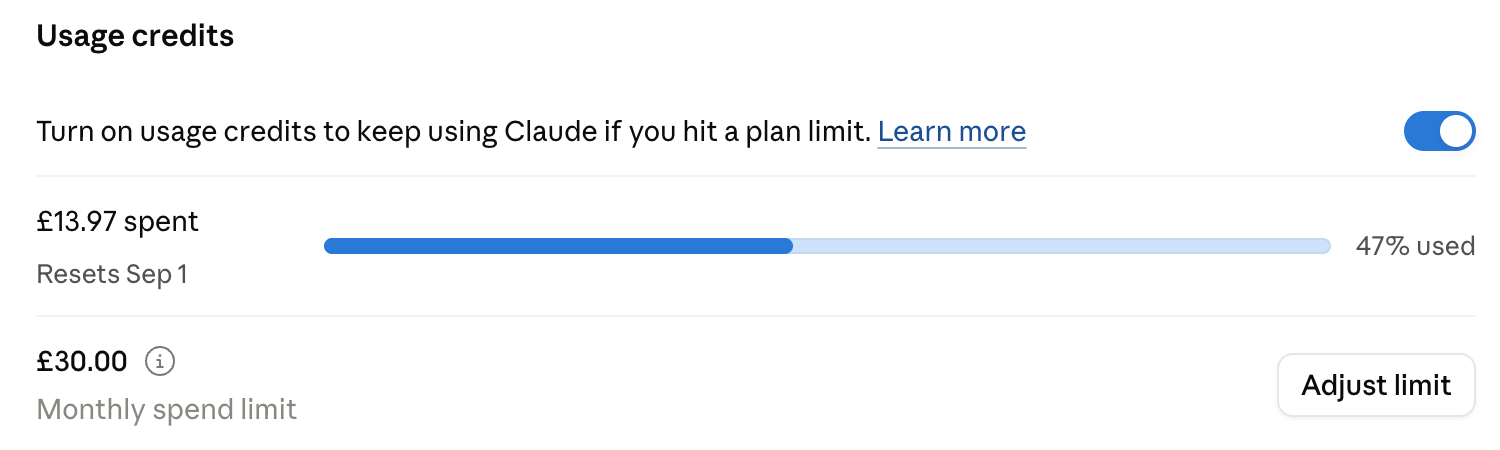
It has taken numerous AI-assisted legal explorations to come up with the framework. It’s probably the heaviest use (for me) of AI in a single week thus far. To spend an additional £14 in usage credits in just a few days is a big deal for me:
The literal translation of the name is “roof made from reeds.” The unpretentious restaurant on the mission museum square provides home cooked meals based on authentic traditional Genadendal recipes: https://share.google/IDcYQ5uSMSHoqNjfK
Transformasie Komitee is Afrikaans for Transformation Committee, the community body constituted under TRANCRAA to represent residents and steer the transfer of their land out of state trusteeship. https://www.facebook.com/profile.php?id=61592723337545
Robben Island is where Nelson Mandela was imprisoned before his release to become South Africa’s first black President in 1994. The UWC Robben Island Mayibuye Archives is custodian to a large multi-media collection depicting the struggle against apartheid and the vision for a just South Africa between the 1940’s to the early 1990’s. https://mayibuye.robben-island.org.za
Only about 35 percent of the world's land has formally documented ownership, tenure, or use rights, and more than 1.1 billion people consider it likely they could lose their land within five years, which is why a contested or unresolved holding is closer to the norm than the exception in this kind of work. See FAO, International Land Coalition and CIRAD, The State of Land Tenure and Governance (2026): https://openknowledge.fao.org/items/c59c8790-b51a-44dc-ac3e-f68f4049dc7c
Leander Heldring, James A. Robinson, and Sebastian Vollmer, “The Economic Effects of the English Parliamentary Enclosures,” NBER Working Paper 29772 (2022), https://doi.org/10.3386/w29772 or https://www.nber.org/papers/w29772
The history of allotment is defined by the General Allotment Act of 1887 (the Dawes Act), the loss of 90 million acres of Native land, and long-term fractionation. According to the Indian Land Tenure Foundation (ILTF), this policy broke apart traditional communal tribal lands to force assimilation and westward expansion. https://iltf.org/land-issues/issues/ Also see Unearthing Indian Land: Living with the Legacies of Allotment by Kristin T. Ruppel (2008): https://www.amazon.com/dp/0816527113
Alienable means “able to be transferred to new ownership.” Your heart, for example, is inalienable, since it cannot (without significant complications for you) be transferred to a new owner.
For the classic account of enclosure as the disembodying of land from society, see Karl Polanyi, The Great Transformation (1944), chapters 3 and 15. https://www.amazon.com/dp/080705643X/ or https://bit.ly/K-Pol for a PDF.
See my curated resources on Ostrom’s Governing the Commons at https://bit.ly/49J7jWy
Tribes, Institutions, Markets, Network: https://bit.ly/TIM-N
I’ll be producing a full paper on this soon, but for now see my curated resources at https://bit.ly/CommPool
Wonderful….I once again see parallels between what you are experiencing and responding to in the valley of grace and our particular threshold here on the Osa. Let’s talk as I would love to understand what the emancipation architecture loos like and it’s possible applicability to our circumstances ❤️
You have a remarkable mind Michael, I am so grateful to have crossed paths with your work. I see you chatting to Michel Bauwens whose work Ive always read, but it feels like you are the first leading heart-mind in South Africa to be looking at Bioregional development framing from a Commons perspective.